Investigative Report - The Learning Process
- Laura Lopes

- 19 de abr. de 2025
- 4 min de leitura
Atualizado: 23 de mar.
Learning is more than simply educational development. It is through learning that you can build personal skills, which in turn can improve your confidence, competence, and even self-esteem. Studying is important to increase your knowledge, and the more you know, the more valuable you are in your career. Another way studying can help your development is in decision-making, and one great and unlikely way to strengthen this skill, for example, is simply learning a new language.
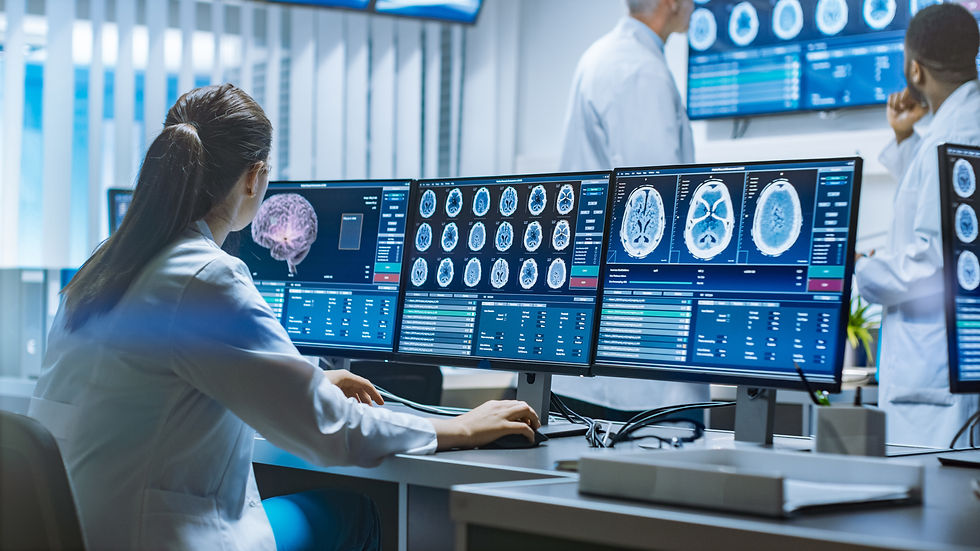
The learning process inside our brains occurs when a neuron connects with another neuron. Your brain is composed of about 85 billion neurons, and each one can be connected with up to 10,000 other neurons. The more you practice, the stronger the connections between neurons will become, making the messages travel through neurons and nerves faster. Thence, you can perform a certain activity with much less effort. However, a strong and lasting memory, or learning, is not solely consolidated by practice. This creation has, in reality, more to do with your emotional response to certain experiences, how new it was to you, where and when it occurred, and your level of attention and motivation.
Studies have shown that people with different skills have different brain structures. A musician, for instance, has a thicker region of auditory cortex than non-musicians. Luckily, however, recent research has found that as we learn, we can actually change the shape of our brains. Still, not every brain will yield the same response to the same stimulus. Evidence from victims of head injury shows that injury to the brain of one person may not result in the same loss in the brain capacities of another person. Brains are like fingerprints: although there are similarities, there are differences that make each brain unique.
The most common manner of learning something new is by practicing, as it is through practice that the connections between your neurons will grow stronger. When you were a baby, for example, each time you came across a new word, you repeated it various times. It is important to note, also, that if you are trying to study for an exam, you should not practice by only looking at all the answers and information, but rather try to recall it on your own. Something even easier to do, but still crucial to learning, is to take breaks or sleep in between study periods: this can help you forget less and optimize learning. An additional strategy you can implement is taking notes by hand. By doing so, you will restate the information in your own words, deepening your familiarity and proficiency on the topic at hand. Also, arranging problems so that consecutive ones will not be solved by the same strategy engages your brain in different activities. Lastly, connect the new information with old ones, because, as said before, the brain makes millions of neuron connections each time we learn, so to boost your learning process, try making some of your own.
Body health is another crucial aspect to consider when improving learning conditions. Physical exercise releases proteins and causes blood flow into the brain. The importance of this is that, by doing just 20 minutes of exercise before studying regularly, we're able to improve memory, motivation, focus, and increase cognitive performance (alertness, attention, etc.). Studies also prove that exercise boosts creativity and mental energy; therefore, if you need inspiration, your big idea could be only a walk away. Besides physical exercises, taking care of your brain by taking care of your body can include something as simple as drinking water. Drinking water can actually make you smarter. According to one study, students who took water with them to an examination room performed better than those who didn’t. Dehydration, on the other hand, can seriously affect mental functions. When you fail to drink water, your brain has to work harder than usual.
For a fun fact, most studies surprisingly indicate that our personalities largely determine the “how” we like to learn. The type of learner you are, as well as the way your brain functions, is partially hereditary. Your genes will influence the type of learner you will be, and it is important to understand yourself and your brain as soon as possible. This can potentially prevent you from frustrating yourself and thinking you cannot learn things because you're not capable, when you are simply not studying the way your brain was designed to.
Strategic learners, especially conscientious people, tend to approach learning more directly and effectively. They care about the result or how they’ll be evaluated, and avoid wasting time on the philosophical stuff. When the problems and goals are clearly defined, this approach can work well. Some people are the opposite, however. Those who are more intellectually curious and open to new experiences will typically adopt a deeper learning style. That means they prefer immersing themselves in the learning experience. These type of people tend to lose track of time when they’re learning and are generally interested in a variety of topics, which makes it harder for them to focus for long on any given one. Those who are sensitive, pessimistic, and moody tend to prefer a more superficial approach to learning. This means they prioritize learning the basics and moving on to another subject or activity. Although they are also focused on results, their main concern is avoiding failure more than reaching success.
Different types of learners will find it easier to learn in different ways, according to the learning approach that best suits them. However, schools tend to teach students as if they were all the same. This neglect of the different ways each student approaches subjects might be the main cause leading them to be demotivated, thinking they are not made to do well in school. Although customized learning programs aren’t yet widespread, differentiated instruction is becoming more common in K-12 classrooms, and in the future, it seems we might benefit from curating more personality-based learning experiences in other contexts.



Comentários